Why the sceptics are wrong on the Belt and Road Initiative










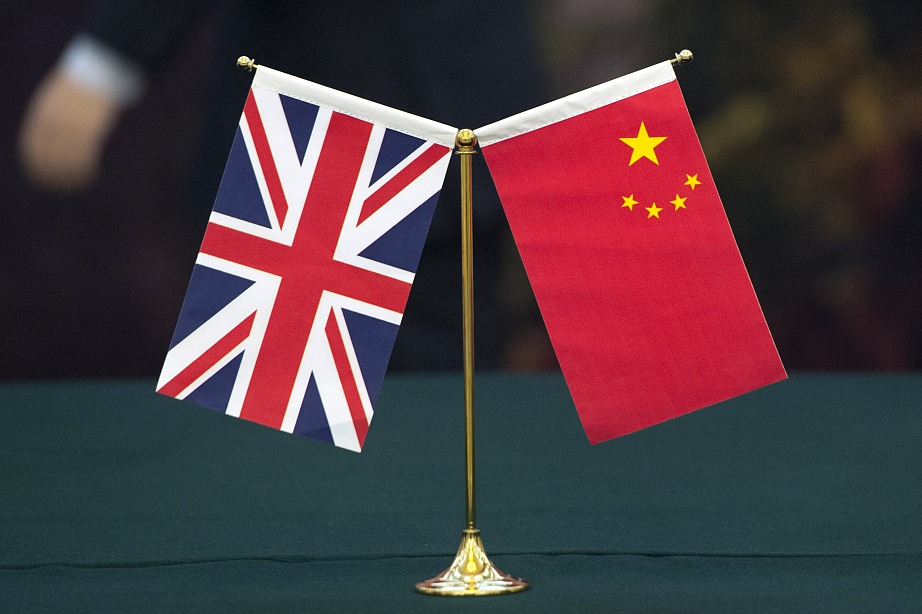
The stage is set for the second Belt and Road Forum (BRF) for International Cooperation in Beijing from April 25. This time BRF will be a much bigger affair, with more heads of State and government, along with thousands of delegates, expected to attend than the first event held mid-May 2017. Along with the forum there will be a conference for the global business community.
China has said that it will seek greater congruence between the Belt and Road Initiative (BRI) and the development strategies of participating countries. BRI will also aim at aligning with key projects in the UN 2030 Agenda for Sustainable Development.
The forum will be themed Belt and Road Cooperation, Shaping a Brighter Shared Future, a testament to BRI's vision. China's aid to Africa is making a more significant impact than the West's condition-based programmes, which were ultimately bad experiments on Africa's economies.
BRI, also known as the Silk Road Economic Belt and the 21st Century Maritime Silk Road, is reminiscent of the ancient network of trade routes that were for centuries central to Asia and Europe.
The route was so significant to China that the country protected it by extending Great Wall. Indeed the political and economic impact of the Silk Road was felt up to the Horn of Africa.
The launch of BRI has been met with mixed reactions. On one side are sections of the Western world, who view it as a tool of Sino hegemony. The other side comprises tens of countries, and hundreds of business interests, who see BRI as a boon to the global economy.
The optimists view the BRI as an opportunity to promote the flow of production factors and public goods for economic growth.
It is now six years since Chinese President Xi Jinping announced BRI.
In the ensuing period, China has signed over 170 agreements with more than 120 countries. BRI has created over 240,000 jobs abroad, with trade between China and BRI partner countries exceeding $6 trillion.
BRI projects are funded mainly through the Asian Infrastructure Investment Bank, Silk Road Fund and Chinese-funded banks, with the initiative's network now spanning five continents.
Leading the few sceptics however is the Group of Seven (G7) and Bretton Woods Institutions, comprising the leading global economies. In a communique after their two-day annual meeting in France on April 6, the G7 demonized BRI as a sign of China's global dominance and an obstacle for Western alliances.
BRI rivals initiatives like America's Trans-Pacific Partnership and the Transatlantic Trade and Investment Partnership. The fact that the BRI is becoming a reality is bound to ruffle the erstwhile established geopolitical order.
BRI will create an open world economy and promote economic globalization. This is something the Western world has dangled to the developing world for decades with no fruition.
The G7 release was followed by a warning from both the World Bank and International Monetary Fund, who recently urged caution with Chinese loans. According to the two multilateral lenders, increased lending by China to developing nations could sow the seeds of a global economic crisis.
The comments were provoked by what they observed as BRI-motivated Chinese lending throughout the developing world, particularly to resource-rich nations.
Many economic experts however say that China's replication of the Silk Road will be highly productive, and have a positive impact on the global economy. What makes BRI attractive is also China's promise to maintain a policy of non-interference in the internal governance of its partners.
The massive amount of money that China is planning to invest in this initiative shows how seriously the country is ready to follow through Xi Jinping's October 2013 vision on connectivity and cooperation. China is putting into practice both its mutual benefit and win-win cooperation policies in establishing BRI.
East Africa forms an integral part of BRI through ongoing improvements to local ports and construction of the first motorway in the region. In Kenya the Chinese-funded Standard Gauge Railway, called the "project of the century", has created 50,000 local jobs and boosted the country's economic growth by 1.5 percent.
It is agreed that BRI is now the largest platform for international cooperation and public good. To date 123 countries and 29 international organizations have signed BRI agreements with China, which is the greatest sign yet of support and confidence.
To support BRI China has promised to fully implement eight major initiatives agreed on during the 2018 Forum on China-Africa Cooperation held in Beijing. These include industrial promotion, infrastructural connectivity, trade facilitation, green development, capacity building, promotion of health care, people-to-people exchange, and peace and security.