China calls on citizens in Africa: Stop wildlife trafficking









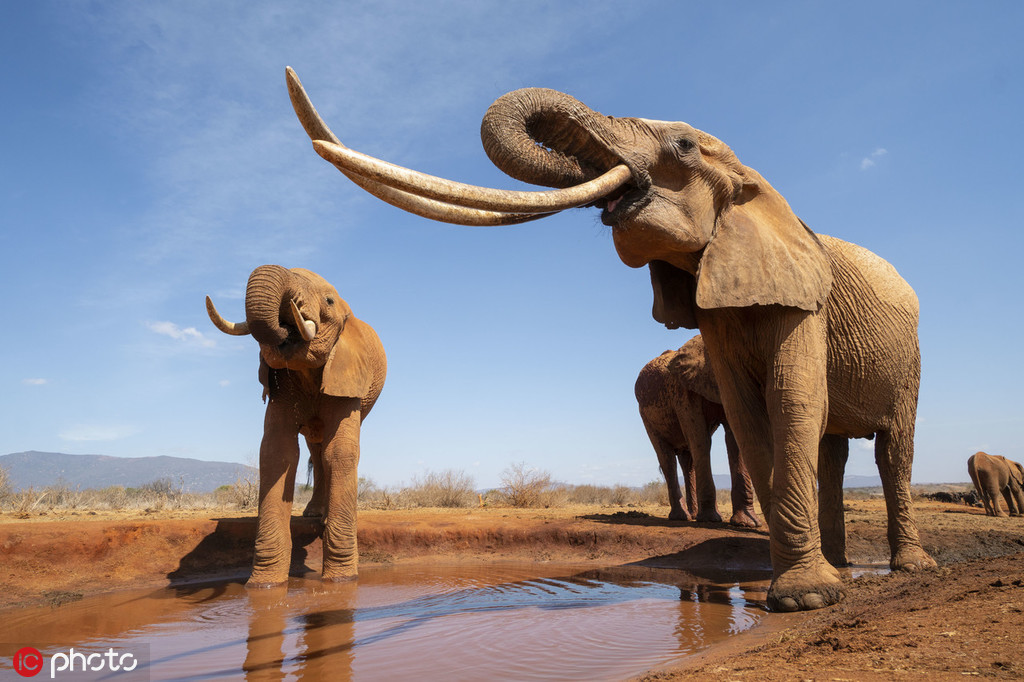
Legal ivory is no longer available in China. Any attempt to bring ivory from abroad is illegal and will be punished by the law, said Zhou Fei, the chief program officer for the World Wildlife Fund (WWF) for Nature China at an advocacy workshop in Kenya's capital Nairobi, on Monday.
The function was held by China's National Forestry and Grassland Administration (NFGA) and WWF, supported by the Chinese embassy in Nairobi with the aim of raising awareness on wildlife trafficking among Chinese nationals living and working in Kenya.
"Ivory or rhino horn items are simply not options as souvenirs or gifts for international travelers," Zhou added.
He was echoed by Wang Xuezheng, the counselor of the Chinese embassy in Kenya, saying that the Chinese government has implemented a total ban on the domestic commercial processing and sales of ivory and products, a sign of China's growing role in combating the illegal ivory trade.
According to the diplomat, wildlife conservation has always been a key area of collaboration between China and Kenya. In 2014, law enforcement of the two countries jointly destroyed an ivory smuggling criminal gang. In 2015, China donated wildlife protection equipment valued at $537,000 to the Kenya Wildlife Service.
"During the recent construction of the Nairobi-Mombasa Madaraka Express Railway, Chinese companies have always focused on wildlife conservation, designing and building hundreds of tunnels, culverts and bridges for wildlife," said the counselor.
In his opening statement, Peng Youdong, the deputy minister of China's NFGA, said China is promoting the concept of sustainable development and the construction of ecological civilization, strengthening endangered species conservation and combating wildlife crime.
"China's recent decision to close its domestic ivory market, to ban the commercial processing of rhino horns and tiger bones, as well as its tightening of legislation governing trade in other endangered wildlife species, demonstrates the government's commitment to tackling illegal wildlife trade," he added.
According to the official, China is now stepping up its enforcement efforts to ensure these important legislative changes bear fruit. This includes intensified monitoring of its markets and crucial transport links as well as increasing border inspection.
"This workshop is also part of the Chinese government's long-term strategy to educate its citizens living and working in Africa to ensure they adhere to international laws governing trade in wildlife and become model citizens abroad," said Peng.
At the end of the workshop, a public pledge to say no to illegal wildlife trade was made by the representative of local Chinese nationals and companies in Kenya. Actually, this was the 15th outreach workshop of its kind jointly conducted by WWF and NFGA in collaboration with various Chinese embassies in Africa.
The workshop follows bilateral meetings between China's President Xi and Kenya's President Uhuru Kenyatta during the 2018 Beijing Summit of the Forum on China-Africa Cooperation (FOCAC) in September, during which the two heads of state committed themselves to enhancing cooperation across various sectors including wildlife conservation.
Chinese citizens now are among the large number of global tourists who visit Kenya each year to witness the seasonal migration of wild animals across the Maasai Mara grasslands, home to over 20 migratory species, including the African elephant.
With the recent expansion of Chinese investment in Africa, incidents of ivory smuggling involving Chinese nationals continue to be reported with serious reputational risks for China internationally. The strengthening of laws to address illegal wildlife trade and the imposition of increasingly tougher penalties by many local African governments has meant that Chinese citizens based in these countries need to be more aware of these regulations and the consequences of engaging in wildlife crimes.
The Chinese government's wildlife protection efforts outside of its territory have gained international praise.
"I am pleased to see China turning to its missions to raise awareness among Chinese citizens living and working on the continent," said Dr Margaret Kinnaird, the WWF Wildlife Practice Leader based in Nairobi.
She continued, "I believe these workshops clearly demonstrate the desire by China not only to close down legal ivory trade within its own borders but to also tackle the wider, devastating illegal trade in elephant ivory by committing itself to educating its citizens living and traveling abroad."