



Chinese economy defies Western misjudgments









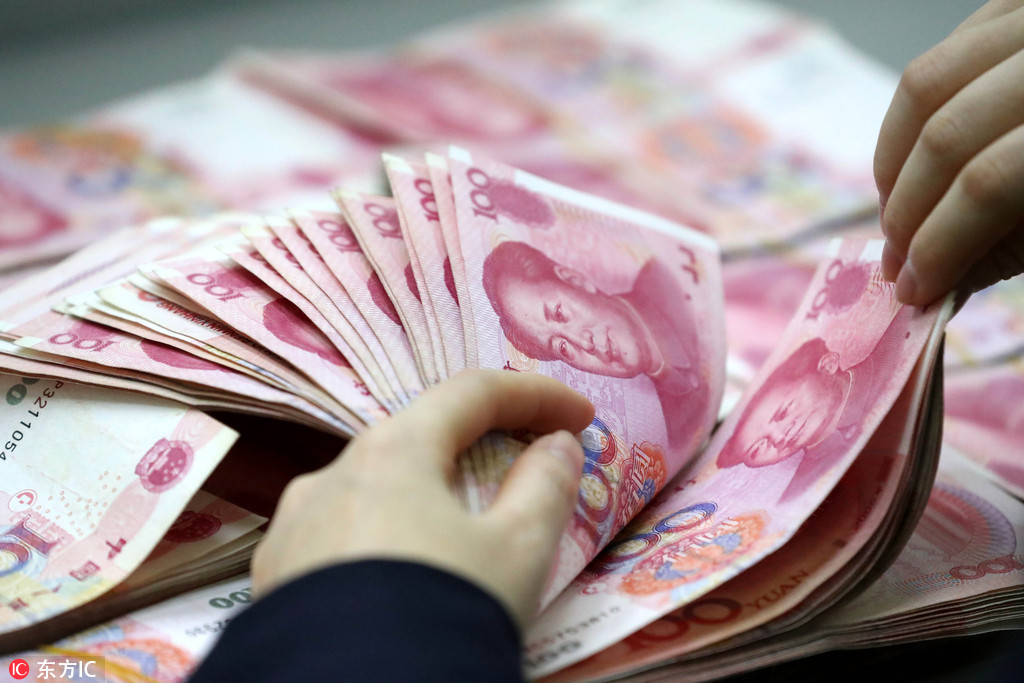
With China's rapid and stable economic growth, its achievements in the past four decades of reform and opening-up are nothing short of a miracle.
That is especially true given the fact that every few years, speculation - among the media and even some renowned economists - re-emerges about a coming "China crash".
The truth is, China is the only emerging market economy that has never been stricken by a systematic financial and economic crisis in the past 40 years. What is more, the country played a stabilizing role when crisis occurred elsewhere.
The best example can be found in the 1997-98 East Asia financial crisis. East Asian economies developed very well before the sudden collapse in 1997. It was a common view at the time that it would take them 10 or even 20 years to recover from the crisis. But they managed to resume fast growth rates by 2000.
How could the misjudgment occur and why was the academic community so pessimistic? I think their biggest mistake lay in their underestimation of China's role. The Chinese yuan did not depreciate and remained an anchor for the whole region. While other countries were busy dealing with the crisis, China scored an 8 percent growth rate and stimulated the recovery in surrounding regions.
Another example is the 2008 global financial crisis. But the world managed to avoid an even worse calamity - something akin to the Great Depression, which was triggered by the New York stock market breakdown in 1929 -because, at the end of 2008, countries decided to adopt common proactive fiscal policies and defended global free trade. China also played a crucial part in preventing another depression. It unveiled a 4 trillion yuan ($595 billion) stimulus package and restored growth in the first quarter of 2009, which contributed to the growth of other emerging markets in the second quarter.
In the second half of 2009, negative growth was stemmed and signs of recovery began to emerge in developed countries. China's contribution was widely recognized by the international community.
Since the Chinese economy has maintained stable and rapid growth and made a huge contribution to the world, why did the "China crash" rhetoric re-emerge in just a few years?
Starting in 1978, China became the first socialist county to initiate reform and opening-up, but it was not the only one looking for transition. Entering the 1980s and 1990s, nearly all socialist countries with planned economies were seeking to transform into a market economy, and all developing countries were striving for transition.
There was a consensus in the academic community during the transition period of the 1980s to the 1990s: Considering that government intervention often led to failure in planned economies, the popular Washington Consensus held that if the transition to a market economy was to be attained, market economy systems and institutions had to be established at one go. Therefore, the first requirement was marketization - allowing prices to be determined by market competition and having them lead the allocation of resources. The second requirement was privatization, since the popular belief at that time was that as long as enterprises were state-owned, market prices would fail to play a role in resource allocation. The third requirement was price stabilization.
The theory seems quite logical and convincing. In 1992, Larry Summers, then the World Bank chief economist and later serving as US Treasury secretary and president of Harvard University, wrote an article expressing the commonly held consensus in the academic community: For the transition from a socialist planned economy to a market economy, shock therapy must be adopted to implement the marketization, privatization and stabilization encapsulated in the Washington Consensus; only in this way could transition be achieved.
However, China did not follow the Washington Consensus. Instead, it has adopted a gradual dual-track approach since 1978. On the one hand, subsidies and protection were kept for existing State-owned enterprises; on the other hand, market access was given to new private players in a number of labor-intensive industries.
What happened to countries that adopted the shock therapy? Instead of the stable and rapid growth that China experienced, they suffered economic collapse, stagnation and more frequent crises, with growth rates even lower than that of the 1960s and 1970s. What is more, the corruption and income disparity problems that occurred in China also afflicted them, but to a much more serious degree.
China's progressive dual-track approach was regarded as the worst at that time, but looking back from where we stand now, the best performers are those that have taken this approach.
The views do not necessarily reflect those of China Daily.










