Private companies reaching for the stars









Last year, the company entered the Philippines by acquiring G Telecoms Inc, the third-biggest telecom operator in the local market.
"In the past, we could only cooperate with local (telecom) carriers in foreign countries by selling our equipment to them. But with this big step, we can operate independently, be it launching our own satellites or providing data-related services," Wu said.
The business could have huge potential as some 75 percent of the Philippines' 100 million population are aged 25 or under and they have a voracious demand for communication services.
So far, CCT has received orders from civil aviation and public security departments in the Philippines, Indonesia and Malaysia.
In 2018, at least 15 private space companies disclosed their financing with the total amount estimated to reach more than 2 billion yuan, according to a report from 36Kr, a science and technology media group.
A report from China Money Network pointed out that seven private space companies had raised more than 1.66 billion yuan by August 2018.
MatrixPartners China, IDG Capital, China Growth Capital and Shunwei Capital were among the major investors.
Despite intensive capital support, industry insiders pointed out that there is still a long way to go for Chinese private firms to gain a lead.
For startups, money is still the bottleneck, said Jiang Yunwei, president of CITIC Juxin (Beijing) Co Ltd Capital Management, in a report.
"A company cannot earn money by launching a single satellite and the commercialization of satellites needs a network of dozens of satellites, which costs a lot," he said.
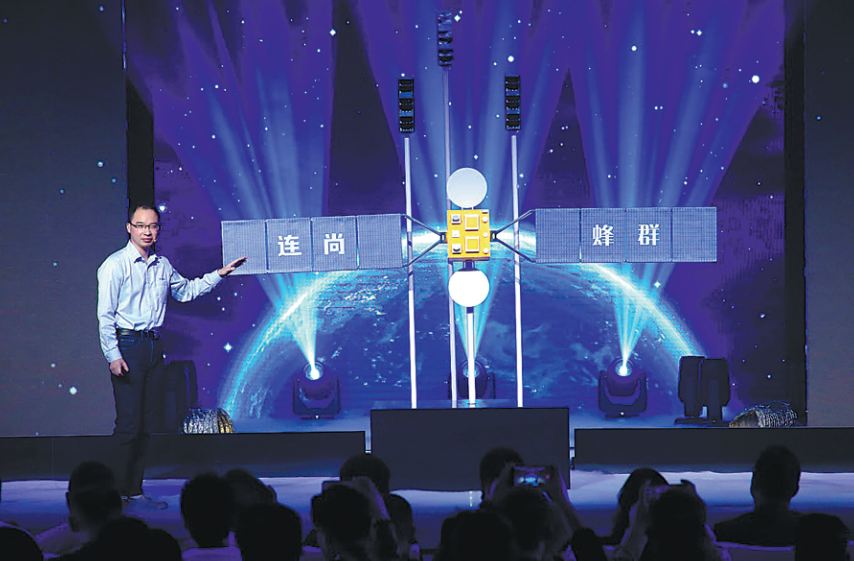
A satellite network requires at least 1.8 to 2 billion yuan, according to Xie Tao, founder and CEO of Beijing-based space startup Commsat Technology Development Co.
Facing such pressure, satellite startups are expected to address another challenge - to reduce the cost of developing and launching up satellites.
"Companies should change their approach of using costly accessories made only for space," said Xie. "Private companies can leverage commercial components to replace expensive ones."
Zhang Jiacheng, an investor in space startup OneSpace, agreed. "China is still at the starting point in the commercial space sector. A well-rounded system needs to be established to offer space startups affordable and sustainable services."