



'One country, two systems' leads road to reunification









To mark the 40th anniversary of the Message to Compatriots in Taiwan, President Xi Jinping said on Jan 2, 2019, that the "one country, two systems" is the best way to realize the reunification of Taiwan and the motherland. And Premier Li Keqiang reiterated the importance of peaceful reunification in the Government Work Report that he delivered on Tuesday.
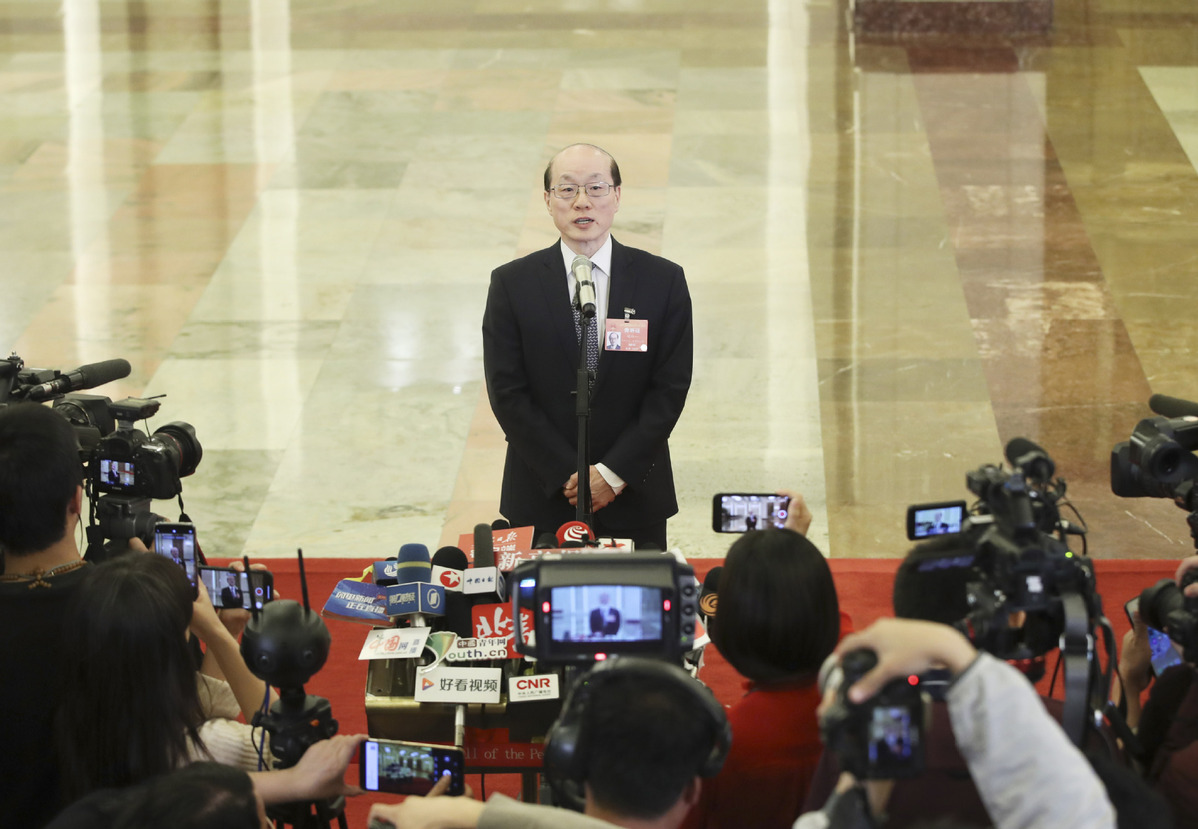
Besides, Liu Jieyi, head of the State Council Taiwan Affairs Office, said on Tuesday that achieving peaceful reunification is a historic mission. Asking Taiwan compatriots to participate in realizing the Chinese Dream of national rejuvenation, Liu said the Chinese mainland will continue its preferential policies toward Taiwan residents and cross-Straits ties, but will never allow any secessionist moves on the island.
Premier Li as well as Liu said China needs to promote peaceful reunification using President Xi's speech as guidance. On Jan 2, Xi said the principle of "one country, two systems" suits the actual conditions of Taiwan and will help improve the well-being of Taiwan compatriots.
If the principle is implemented, the opinions of different sectors on both sides of the Straits, and the interests and feelings of Taiwan compatriots will be fully taken in account.
Reunification will not only safeguard national sovereignty and security, and ensure that economic development benefits both sides of the Straits, but also fully respect Taiwan residents' social system and lifestyles.
Xi also said the "one country, two systems" principle is best suited for reunification, as it shows Chinese wisdom of innovation, and respects diversity, which thus will help maintain stability and prosperity in Taiwan.
The Chinese mainland's policy for reunification has gone through three stages since 1949: from liberation of Taiwan by force and peaceful liberation of Taiwan to peaceful reunification. In the current era of peaceful development, therefore, peace instead of war, talks rather than confrontation, cooperation instead of struggle, and win-win arrangement rather than zero-sum game have been significantly encouraged. And in conformity with the era of peaceful development, the "one country, two systems" principle, a great innovation of the state structural model, is the ideal prescription for reunification.
According to the "one country, two systems" principle, the central government would decide only vital policies such as the foreign and national security policies, while Taiwan would enjoy a high level of autonomy in fields such as governance and internal social affairs just as it does now.
Thus, based on the principle's connotations, "one country, two systems" is unarguably superior than any other method for reunification.
First, the "one country, two systems" principle will not only help realize national reunification and safeguard overall national sovereignty, security and interests, but also enable the two sides to resolve their differences and maintain stability on the island. Political confrontations both in cross-Straits fields and international areas have caused so much damage and suffering to the whole country that peaceful reunification has become the common aspiration of the Chinese people.
Second, the "one country, two systems" principle will help two different social systems-socialist and capitalist systems-to coexist. Also, under the "one country, two systems" principle, the two sides across the Straits can better complement and cooperate with each other and thus realize integrated development, and jointly promote national development and rejuvenation.
Third, the principle will not only enable the people on both sides to nurture different social systems and promote their interests, but also enhance their common interests and national identity.
Besides, "one country, two systems" will also help build an overall national mechanism that will ensure the concerns of residents on both sides are addressed and their private property, religious belief and legal rights are always protected.
The author is the deputy director of the Taiwan Research Center, Xiamen University.





