New Africa free trade zone may struggle









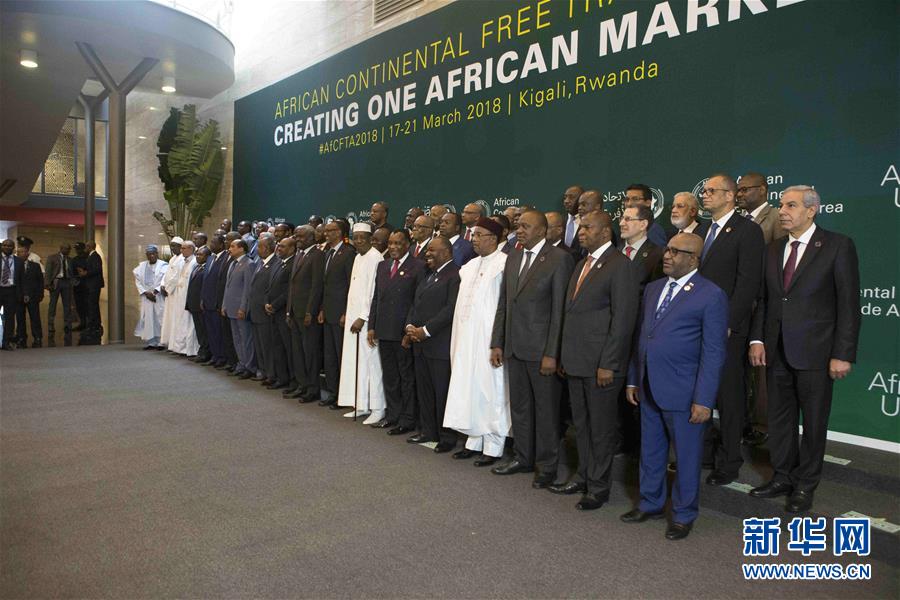
Continental FTA is slated to launch in May, but non-tariff barriers may persist
Decline in trade in the intra-East Africa Community, Africa's most dynamic regional economic bloc, is casting doubts over the takeoff of the soon-to-be-established Continental Free Trade Area, according to experts.
The speed at which governments are resolving obstacles, however, may be an indication of commitment to drive the integration agenda that would create the biggest free trade market in the world. Expectations are high that the agreement will enter into force in May.
Last March, 44 African countries signed the CFTA agreement to create a single market for goods and services, with free movement of people and capital. Once enforced, it would create a market of more than 1.2 billion people with a rapidly growing middle class and a combined African GDP of $3.4 trillion under the CFTA, more than that of India, which had a GDP of $2.6 trillion in 2017.
The free trade zone has the potential to boost intra-African trade by 52.3 percent by 2020, according to UN Economic Commission of Africa. For this to be achieved, countries need to eliminate import duties, and to double this trade, non-tariff barriers will also have to be cut.
Albeit posting an average growth of almost 6 percent over the last decade, intra-EAC trade has fallen from $3.5 billion in 2013 to $2.4 billion in 2017, according to a research carried out by the Regional Office for Eastern Africa of UNECA in September 2018.
It conclusively proved that the five countries-Kenya, Uganda, Tanzania, Rwanda and Burundi-are collectively trading with itself at half its potential level, said the report.
Experts blame the underperformance on non-tariff barriers, calling them protectionist and discriminatory rules that largely persist especially in the agricultural sector. This is in addition to poor policies to stimulate expansion of the manufacturing sector at a rate equal to or faster than the broader rate of economic growth.
"Most of the obstacles experienced in the region are compounded by protectionist policies," said Robert Kagirian adjunct lecturer at the Institute of Diplomacy and International Studies, University of Nairobi. "Although there have been efforts to reduce them, fresh ones keep emerging," said the economist.
During the recent EAC heads of state summit in Tanzania, a report on the status of long outstanding non-tariff barriers showed that at least 45 had been resolved, 17 were outstanding while two were chronic.
Peter Mathuki, chief executive officer of the East Africa Business Council, said this was a vote of confidence to the integration process. "We are on stable grounds," he said. "I believe that the success of the EAC will inform the CFTA," he said.
He revealed that residents in the region still pay higher prices for goods, negating the benefits of the regional block. The barriers are intertwined, he said, and one cannot be resolved independent of the other. He points to delays at the borders, different standard quality checks that attract taxes and additional costs such as storage. "There are better ways to resolve this and that is why the business community is pushing for more engagement at the decision-making level."
In the summit, the leaders resolved to strongly support the entrepreneurs, saying the spirit of the region remains private-sector led.
Karigi refuted claims that the EAC integration momentum is losing steam. "The focus previously has been on policies. It has, however, become obvious that policies will be implemented by the private sector. And this is where we are at the moment."
He noted that the success of the CFTA will be built on success of the regional economic blocs. "The CFTA will not replace the current blocs, but rather build upon them and ensure greater harmonization and coordination between them. It is imperative, therefore, for the blocks to have high intra-trade before opening their borders to others."
- Kenya partners with South Korea to provide high-quality Science and Technology education
- S. Africa aiming to narrow wage gap
- BRI creates new drivers for common development between China, Nigeria: Chinese ambassador
- China sets model for Africa e-commerce
- BRI promotes global trade, connectivity: think tanks