Using diplomacy to meet economic needs









The year 2018, among other things, was marked by turbulence, from the China-US trade frictions and the lingering economic downturn in European economies to the increasingly complicated situation in the Middle East and the crises in Latin American countries. Which means 2019 could throw up more uncertainties.
Several prominent features were evident globally last year. First, competitions among major countries dominated global politics. A critical shift in US politics was a return to the great power competition, which many regard as the most significant geostrategic development.
In addition, US policymakers also issued a series of reports re-appraising many of the US' national security objectives and identifying China and Russia as major rivals, which was a shift from past US foreign policy.
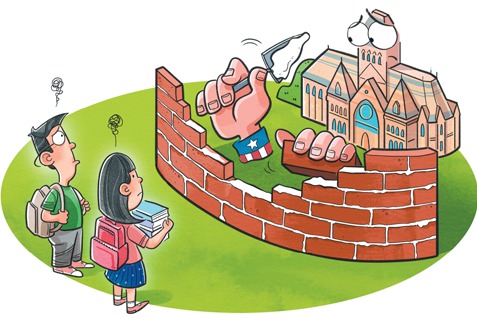
Second, the United States resorted to trade protectionism, imposing high tariffs on imports from many countries, including its allies, which likely means that in Western policy wisdom, the concept of free trade has been marginalized.
Complicated regional trends were another defining feature of the global landscape. In Europe, the gilets jaunes (yellow vest) protests took France by storm, spreading to neighboring countries. And the confrontation between Russia and Ukraine in the Kerch Strait reminded the world to be on guard and avoid even unwittingly causing a spark that could lead to a full-fledged war.
In the Middle East, the situation became even more complex as major outside powers signaled their withdrawal from the region. And in Latin America, the situation showed no improvement-of course, Brazil got a new president but he was accompanied by fresh unrests erupting in the country.
The situation in Africa, however, appeared better than expected. Even though terrorism continues to haunt parts of North Africa, it is less intense than before. On the other hand, many African countries have made steady progress in industrialization, which will help them solve their key problems.
However, modern manufacturing, rather than traditional agriculture, will create more employment opportunities for the African people, and Chinese enterprises are trying to do exactly that by applying modern technology to manufacturing.
As for the Asia-Pacific region, it saw some positive developments last year. In particular, tensions eased on the Korean Peninsula and in the South China Sea. Apart from that, China shared good relations with other major economies, consolidated its friendships with neighboring and other developing countries, and expanded its influence in international organizations.
Despite these positive developments, however, China faces a diplomatic challenge as the United States sees it as a major long-term strategic competitor, which has made the Sino-US trade conflict even more complex.
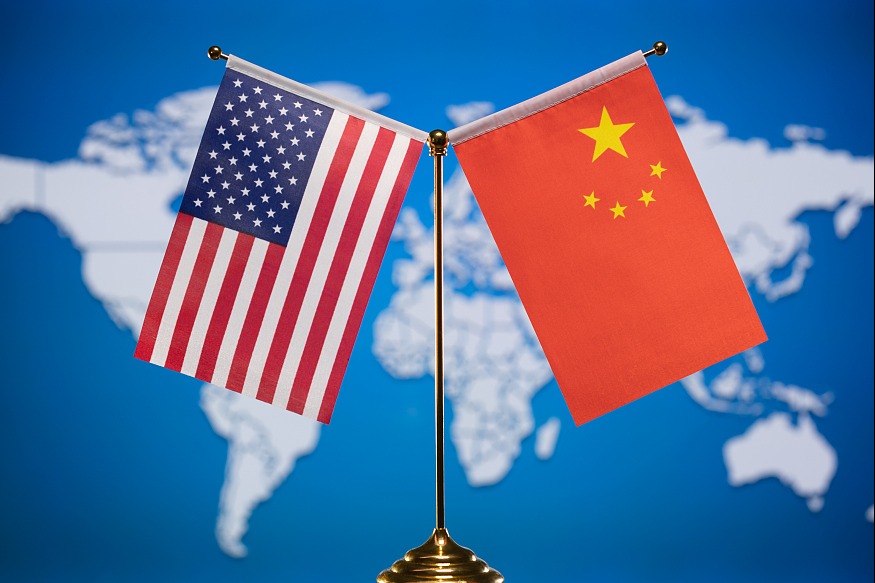
This year marks the 40th anniversary of the establishment of China-US diplomatic ties, and their four-decade-old partnership has brought huge benefits to both countries, as well as the rest of the world. But the fact that the present US administration sees China as a challenger, not as a partner, has altered Sino-US economic relations.
As a result, more conflicts between the two countries could be seen in the long run.
Given these facts, China should focus on its own development strategy and economic transformation while steadily advancing relations with other countries and promoting the Belt and Road Initiative.
Last year, President Xi Jinping made two key observations-that today's world is experiencing profound changes not seen in the past century, and that it is important to build a BRICS partnership to lead the Fourth Industrial Revolution.
That is to say, almost all countries face challenges as well as opportunities, and the shift in the balance of power has accelerated.
As such, China should stick to its own development path, and seize the opportunities offered by the Fourth Industrial Revolution while sharing them with other emerging countries.
The author is a professor and vice-dean of the School of International Studies at Renmin University of China.