
日批在线视频_内射毛片内射国产夫妻_亚洲三级小视频_在线观看亚洲大片短视频_女性向h片资源在线观看_亚洲最大网

Antony Leung Kam-chung
Hong Kong businessman and former politician
BORN:

Jan 29, 1952, in Hong Kong

EDUCATION:

1973: Bachelor of social sciences, economics and statistics, University of Hong Kong

1982: Management development program, Harvard Business School

1999: Advanced management program, Harvard Business School

CAREER:

1973-96: Currency trader and regional manager in New York and across Asia, Citigroup

1990-98: Chairman, Hong Kong University Grants Committee

1996-2001: Head of Greater China and the Philippines, Chase Manhattan Bank (now JPMorgan Chase)

1997-2001: Non-official member, Hong Kong Executive Council

1998-2001: Chairman, Hong Kong Education Commission

2000-01: Chairman in Asia-Pacific, JPMorgan Chase

2001-03: Financial secretary, Hong Kong

2007-14: Senior managing director and chairman for Greater China, The Blackstone Group

2014-present: Chairman and CEO, Nan Fung Group

2016-present: Co-founder and chairman, New Frontier Group

The banker who helped build Greater Bay Area
After joining HK government, Antony Leung proposed measures to aid China's economic revival
He Shusi in Hong Kong
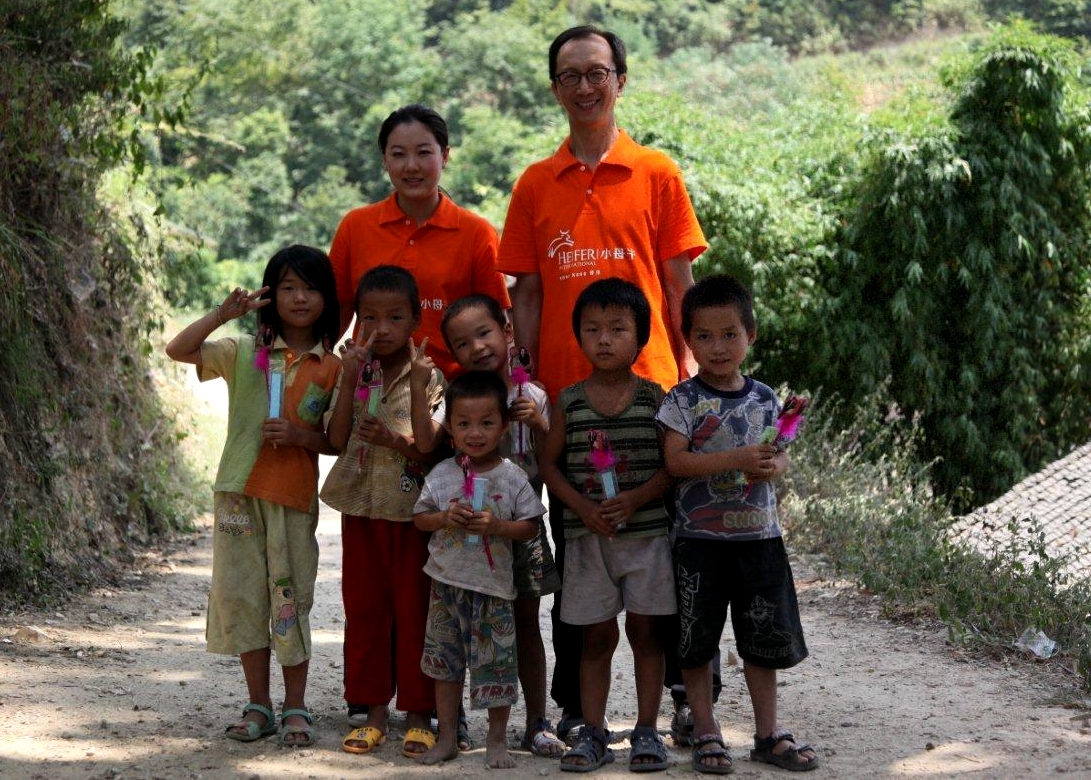
Leung and his wife, Fu Mingxia, pose with children as love ambassadors of an international charity organization during a trip to Guizhou province in August 2011. [Photo/Xinhua]

Going against the trend

In 1996, Leung oversaw Citibank's private banking operations across Asia from Singapore.

That was the year before Hong Kong's scheduled return to the motherland. Part of the population was jittery as they did not know what the handover would mean. Some packed up and left, seeking a future elsewhere.

However, Leung chose to stay, though he could have moved on with his career at Citibank.

"Many people were worried about whether the 'one country, two systems' would work, and whether the political transition would be smooth," he said. "I thought if given the chance to participate, I should go for it." Leung left Citibank after 23 years and went to work for Chase Manhattan Bank, which is now known as JPMorgan Chase.

He returned to Hong Kong, the city where he grew up, after his stint in Singapore.

"Looking back, I think it was a good decision, and a good opportunity," he said.

"I was fortunate to have assisted Tung Chee-hwa in his successful bid to become the special administrative region's first chief executive. When he took office, I was asked to join his Executive Council as a non-official member. The council was the SAR's top policy advisory body. I had a chance to make some impact on the city's development."

Money not a priority

By 2001, Hong Kong was still groping its way through a shaky start as a special administrative region. In 1998, just a year after its return to China, Asia was hit by a major financial crisis.

Hong Kong's economy faced serious financial hurdles, and unemployment ran high. Amid the chaos around him, Leung took the biggest risk of his life. He gave up an annual salary at JPMorgan of more than HK$20 million ($2.56 million), and became the Hong Kong SAR's second financial secretary. The salary for that post was around HK$4 million a year.

"The money one man can spend is limited... so money wasn't part of my thinking," Leung told local media at the time. "My consideration was whether I could serve Hong Kong... and make a difference."

Leung became the first cabinet secretary in the new administration without a background in politics or the civil service.

He remembers people saying to him: "It takes a thief to catch a thief." Leung smiled interpreting the comment to mean, "Hong Kong now has somebody with years of solid front line experience in the financial world to manage the other 'thieves'."

Leung brought in bold measures that aided the city's recovery. There were tax increases and sizable cuts to government expenditure.

Among the measures that Leung proposed to Tung was the idea that the city's infrastructure development should include the construction of the Hong Kong-Zhuhai-Macao Bridge and the Guangzhou-Shenzhen-Hong Kong Express Rail Link.

"I told Tung that if we didn't catch up on transport links with the Chinese mainland, Hong Kong would become an 'appendix' to the area. ... He immediately got the idea," Leung said.


Antony Leung Kam-chung
Hong Kong businessman and former politician
BORN:

Jan 29, 1952, in Hong Kong

EDUCATION:

1973: Bachelor of social sciences, economics and statistics, University of Hong Kong

1982: Management development program, Harvard Business School

1999: Advanced management program, Harvard Business School

CAREER:

1973-96: Currency trader and regional manager in New York and across Asia, Citigroup

1990-98: Chairman, Hong Kong University Grants Committee

1996-2001: Head of Greater China and the Philippines, Chase Manhattan Bank (now JPMorgan Chase)

1997-2001: Non-official member, Hong Kong Executive Council

1998-2001: Chairman, Hong Kong Education Commission

2000-01: Chairman in Asia-Pacific, JPMorgan Chase

2001-03: Financial secretary, Hong Kong

2007-14: Senior managing director and chairman for Greater China, The Blackstone Group

2014-present: Chairman and CEO, Nan Fung Group

2016-present: Co-founder and chairman, New Frontier Group

The banker who helped build Greater Bay Area

After joining HK government, Antony Leung proposed measures to aid China's economic revival
He Shusi in Hong Kong
Leung and his wife, Fu Mingxia, pose with children as love ambassadors of an international charity organization during a trip to Guizhou province in August 2011. [Photo/Xinhua]

Going against the trend

In 1996, Leung oversaw Citibank's private banking operations across Asia from Singapore.

That was the year before Hong Kong's scheduled return to the motherland. Part of the population was jittery as they did not know what the handover would mean. Some packed up and left, seeking a future elsewhere.

However, Leung chose to stay, though he could have moved on with his career at Citibank.

"Many people were worried about whether the 'one country, two systems' would work, and whether the political transition would be smooth," he said. "I thought if given the chance to participate, I should go for it." Leung left Citibank after 23 years and went to work for Chase Manhattan Bank, which is now known as JPMorgan Chase.

He returned to Hong Kong, the city where he grew up, after his stint in Singapore.

"Looking back, I think it was a good decision, and a good opportunity," he said.

"I was fortunate to have assisted Tung Chee-hwa in his successful bid to become the special administrative region's first chief executive. When he took office, I was asked to join his Executive Council as a non-official member. The council was the SAR's top policy advisory body. I had a chance to make some impact on the city's development."

Money not a priority

By 2001, Hong Kong was still groping its way through a shaky start as a special administrative region. In 1998, just a year after its return to China, Asia was hit by a major financial crisis.

Hong Kong's economy faced serious financial hurdles, and unemployment ran high. Amid the chaos around him, Leung took the biggest risk of his life. He gave up an annual salary at JPMorgan of more than HK$20 million ($2.56 million), and became the Hong Kong SAR's second financial secretary. The salary for that post was around HK$4 million a year.

"The money one man can spend is limited... so money wasn't part of my thinking," Leung told local media at the time. "My consideration was whether I could serve Hong Kong... and make a difference."

Leung became the first cabinet secretary in the new administration without a background in politics or the civil service.

He remembers people saying to him: "It takes a thief to catch a thief." Leung smiled interpreting the comment to mean, "Hong Kong now has somebody with years of solid front line experience in the financial world to manage the other 'thieves'."

Leung brought in bold measures that aided the city's recovery. There were tax increases and sizable cuts to government expenditure.

Among the measures that Leung proposed to Tung was the idea that the city's infrastructure development should include the construction of the Hong Kong-Zhuhai-Macao Bridge and the Guangzhou-Shenzhen-Hong Kong Express Rail Link.

"I told Tung that if we didn't catch up on transport links with the Chinese mainland, Hong Kong would become an 'appendix' to the area. ... He immediately got the idea," Leung said.

主站蜘蛛池模板: 久久精品一区 | 伊人久久久久久久久 | 日韩精品一线二线三线 | 久久国产精品久久 | 亚洲欧美综合在线观看 | 欧美日韩在线看 | 91精品国产综合久久精品图片 | 日韩中文一区二区 | 国产精品视频看看 | 日韩精品国产一区 | 欧美性综合 | 九九免费精品视频 | 一级毛毛片| 久久久久久久福利 | 国产一级视频在线 | 国产精品自拍在线观看 | 香蕉视频在线观看视频 | www.五月天激情 | 欧美日韩字幕 | 户外少妇对白啪啪野战 | 色网免费| 黄页在线免费观看 | 91变态视频| 韩国jizz | 丁香花婷婷 | 韩国一级淫一片免费放 | 少妇高潮在线观看 | 亚洲的天堂 | 成人免费在线看片 | 免费看黄在线 | 亚洲成人免费视频 | 亚洲国产精品久 | 天堂综合 | 欧美成人精品欧美一级 | 不卡国产视频 | 欧美精品免费在线观看 | 日韩三级久久久 | 色婷婷狠狠干 | 欧美激情国产精品 | 欧美中文字幕在线 | 丰满漂亮的日本岳 |