
日批在线视频_内射毛片内射国产夫妻_亚洲三级小视频_在线观看亚洲大片短视频_女性向h片资源在线观看_亚洲最大网

Yue-Sai Kan
TV host, producer and entrepreneur
EARLY LIFE:

Yue-Sai Kan was born in 1946 in Guilin, now part of the Guangxi Zhuang autonomous region, and grew up in Hong Kong. In the late 1960s she studied piano at Brigham Young University in Hawaii.

TELEVISION WORK:

In 1972, she moved to New York, where she formed Yue-Sai Kan Productions and created her first major TV production, a weekly series called Looking East.

In 1984, PBS invited her to host the first live broadcast from China to coincide with the 35th anniversary of the People's Republic of China.

In 1986, the bilingual television series One World was produced and hosted by Kan and aired on China Central Television, the State broadcaster. Kan's other US TV credits include the ABC documentary China: Walls and Bridges, which earned her an Emmy Award.

BUSINESS VENTURES:

In 1992, she launched the Yue-Sai makeup brand, which became China's leading cosmetics company.

In 2008, she created lifestyle retail brand House of Yue-Sai with the aim of bringing style, elegance and inspiration to Chinese consumers.

Since 2011, Kan has served as national director of Miss Universe China and has championed Chinese creativity via her annual China Fashion Gala in New York.

HONORS:

To acknowledge her contribution, the Shanghai Soong Qing Ling Foundation sanctioned the establishment of the China Beauty Charity Fund and appointed Kan as ambassador and chairman.

In 2006, she started serving as chairman of the invitation committee for the Shanghai International Film Festival. Her title was changed to SIFF international ambassador in 2015.

TV host and fashion icon who introduced China to the world
Yue-Sai Kan broke the mold with her '80s travel show before launching an inspirational cosmetics line
WANG LINYAN
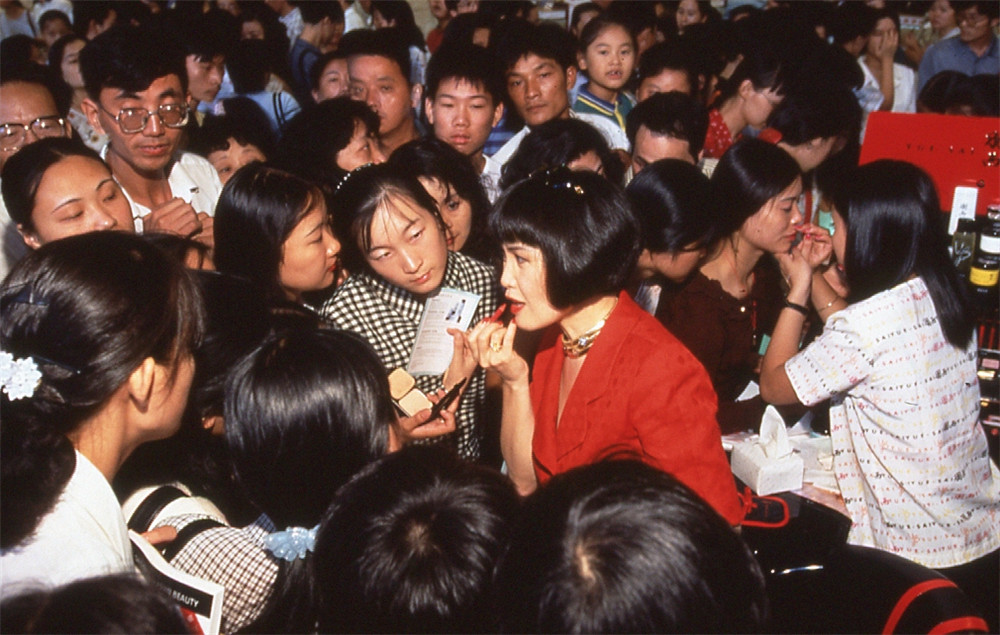
Yue-Sai Kan demonstrates makeup for customers in a shopping center in Shanghai in 1996. PHOTOS PROVIDED TO CHINA DAILY

Empowering women

The show made Kan a household name. Her trademark haircut-known as the Yue-Sai hairdo-and her Western makeup and clothes fascinated people in the '80s, when women dressed in a similar style and looked the same, with short haircuts and no makeup.

"It was really an alien idea to smear lipstick on your lips. Only actresses at that time used lipstick. Now it's as common as adding toothpaste to your toothbrush in the morning," she said in an interview at her New York apartment.

Kan launched her first cosmetics products under her Yue-Sai brand in September 1992 in Shanghai, two years after she had registered a company in Shenzhen, Guangdong province.

The product launch at Shanghai No 1 Department Store was so crowded with people wanting to see Kan that police found it virtually impossible to maintain control. The event had to be moved to a bigger venue, Hualian Department Store, where Kan was able to talk with fans and show them how to apply the makeup.

Sales on the first day hit 20,000 yuan (about $3,600 at the time).

"It was like a breath of fresh air, just like in television," Kan recalled. "We basically colorized the whole country. This is happy-you can have your individual look. You don't have to look like anybody else. You are you. So the idea is empowerment. The spirit is more important than anything else."

The potential for China's cosmetics market was released with the country's opening-up. Kan's company expanded from three stores in Shanghai to more than 800 in 250 cities across China, becoming No 1 in both market share and sales for years.

"We were doing 10 times the business anyone else was in the department stores. The impact was very big. And it empowered women," Kan said.

She went on to select 30 people from 1,200 applicants for a course teaching them makeup skills. They became China's first beauty advisers, doing makeovers for customers and sharing makeup tips while selling cosmetics.

"Before my cosmetics came out, the Chinese had never heard the word shishang (fashion). We brought fashion to China. That's the beginning of saying'I want to look beautiful'. That was the beginning of Chinese fashion."
Like the TV program, Kan's cosmetics influenced millions of Chinese, well before the arrival of the internet.

Kan said the reasons for the changes in society were simple.

"No 1, the Chinese government wanted to change it. They wanted change in a number of ways. They wanted reform and opening-up," she said. "But how can you open when your citizens don't know anything about the outside world? So they are very smart. They used TV.… They wanted to use it to educate people. That's the most important thing."

The second reason was that the Chinese people were ready for change, she said. "I was afraid that someone would come up and say what I did was really bad for China. I was really scared. But it was the opposite because Chinese women were ready to look different."

The key word is "ready", Kan said, adding that she was simply in the right place at the right time.

"People were curious. People were ready, and I happened to be the person to do it. Everything was just right," she said. "If I were to produce a new TV program now, it would not have the same impact. If I launched a cosmetics line today, it would not be as impactful. It would be very successful, but it wouldn't have that impact."


|<< Previous 1 2 3 4 Next   >>|
Yue-Sai Kan
TV host, producer and entrepreneur
EARLY LIFE:

Yue-Sai Kan was born in 1946 in Guilin, now part of the Guangxi Zhuang autonomous region, and grew up in Hong Kong. In the late 1960s she studied piano at Brigham Young University in Hawaii.

TELEVISION WORK:

In 1972, she moved to New York, where she formed Yue-Sai Kan Productions and created her first major TV production, a weekly series called Looking East.

In 1984, PBS invited her to host the first live broadcast from China to coincide with the 35th anniversary of the People's Republic of China.

In 1986, the bilingual television series One World was produced and hosted by Kan and aired on China Central Television, the State broadcaster. Kan's other US TV credits include the ABC documentary China: Walls and Bridges, which earned her an Emmy Award.

BUSINESS VENTURES:

In 1992, she launched the Yue-Sai makeup brand, which became China's leading cosmetics company.

In 2008, she created lifestyle retail brand House of Yue-Sai with the aim of bringing style, elegance and inspiration to Chinese consumers.

Since 2011, Kan has served as national director of Miss Universe China and has championed Chinese creativity via her annual China Fashion Gala in New York.

HONORS:

To acknowledge her contribution, the Shanghai Soong Qing Ling Foundation sanctioned the establishment of the China Beauty Charity Fund and appointed Kan as ambassador and chairman.

In 2006, she started serving as chairman of the invitation committee for the Shanghai International Film Festival. Her title was changed to SIFF international ambassador in 2015.

TV host and fashion icon who introduced China to the world

Yue-Sai Kan broke the mold with her '80s travel show before launching an inspirational cosmetics line
WANG LINYAN
Yue-Sai Kan demonstrates makeup for customers in a shopping center in Shanghai in 1996. PHOTOS PROVIDED TO CHINA DAILY

Empowering women

The show made Kan a household name. Her trademark haircut-known as the Yue-Sai hairdo-and her Western makeup and clothes fascinated people in the '80s, when women dressed in a similar style and looked the same, with short haircuts and no makeup.

"It was really an alien idea to smear lipstick on your lips. Only actresses at that time used lipstick. Now it's as common as adding toothpaste to your toothbrush in the morning," she said in an interview at her New York apartment.

Kan launched her first cosmetics products under her Yue-Sai brand in September 1992 in Shanghai, two years after she had registered a company in Shenzhen, Guangdong province.

The product launch at Shanghai No 1 Department Store was so crowded with people wanting to see Kan that police found it virtually impossible to maintain control. The event had to be moved to a bigger venue, Hualian Department Store, where Kan was able to talk with fans and show them how to apply the makeup.

Sales on the first day hit 20,000 yuan (about $3,600 at the time).

"It was like a breath of fresh air, just like in television," Kan recalled. "We basically colorized the whole country. This is happy-you can have your individual look. You don't have to look like anybody else. You are you. So the idea is empowerment. The spirit is more important than anything else."

The potential for China's cosmetics market was released with the country's opening-up. Kan's company expanded from three stores in Shanghai to more than 800 in 250 cities across China, becoming No 1 in both market share and sales for years.

"We were doing 10 times the business anyone else was in the department stores. The impact was very big. And it empowered women," Kan said.

She went on to select 30 people from 1,200 applicants for a course teaching them makeup skills. They became China's first beauty advisers, doing makeovers for customers and sharing makeup tips while selling cosmetics.

"Before my cosmetics came out, the Chinese had never heard the word shishang (fashion). We brought fashion to China. That's the beginning of saying'I want to look beautiful'. That was the beginning of Chinese fashion."
Like the TV program, Kan's cosmetics influenced millions of Chinese, well before the arrival of the internet.

Kan said the reasons for the changes in society were simple.

"No 1, the Chinese government wanted to change it. They wanted change in a number of ways. They wanted reform and opening-up," she said. "But how can you open when your citizens don't know anything about the outside world? So they are very smart. They used TV.… They wanted to use it to educate people. That's the most important thing."

The second reason was that the Chinese people were ready for change, she said. "I was afraid that someone would come up and say what I did was really bad for China. I was really scared. But it was the opposite because Chinese women were ready to look different."

The key word is "ready", Kan said, adding that she was simply in the right place at the right time.

"People were curious. People were ready, and I happened to be the person to do it. Everything was just right," she said. "If I were to produce a new TV program now, it would not have the same impact. If I launched a cosmetics line today, it would not be as impactful. It would be very successful, but it wouldn't have that impact."

主站蜘蛛池模板: 男人天堂av在线播放 | 91成人一区| aaa一区二区 | 日韩爱爱 | 日本www色 | 国产精品成人在线视频 | 亚洲少妇激情 | 亚洲精品国产一区二 | 蜜臀av粉嫩av懂色av | 欧美成人免费在线视频 | 日本视频www | 欧美a级片视频 | 国产网站黄色 | 五月婷婷俺也去 | 亚洲女人初尝黑人巨大 | 成年人看的免费视频 | 久久久免费看片 | 日本久久网站 | 亚洲黄色大全 | 免费精品视频 | 草在线| 黑人巨大国产9丨视频 | 天天摸天天操 | 操操操操操操 | 国产精品久久婷婷六月丁香 | 亚洲色图另类小说 | 一级片久久久 | 亚洲欧洲一区二区 | 玖草视频在线 | 日本欧美一区二区 | 99视频网站 | 欧美性猛交xxxx | 久草福利资源在线 | 国产片网址 | 亚洲激情自拍 | 国产四虎| 欧美日韩在线观看成人 | 日韩中文在线字幕 | 日本黄色激情视频 | 性欧美又大又长又硬 | 日韩精品一区二区三区在线观看 |