



Chinese energy companies get extra charge from B&R Initiative










The Belt and Road Initiative is providing Chinese energy companies with more opportunities to seek overseas expansion and is helping involved economies to optimize their energy structure, according to a senior industry expert.
Wen Hui, chairman and president of Beijing Tus-Clean Energy, made the remarks during a recent exclusive interview with China Daily.
"China has advantages in clean energy technology and production," Wen said. "The Belt and Road Initiative encourages domestic businesses to explore opportunities abroad."
The initiative, proposed by China in 2013, refers to the Silk Road Economic Belt and the 21st Century Maritime Silk Road, and is aimed at increasing international cooperation by revitalizing the ancient trade routes of the Silk Road.
Many of the countries and regions involved in the initiative are short on power supply, which has created enormous demand, Wen said.
Chinese players in the industry outperform their rivals for high cost-efficiency and technological expertise, so they are playing an active role in improving the energy infrastructure in those countries and regions, he noted.
A report on China's new energy development in B&R initiative-related countries and regions showed that per capita power consumption was less than 1,700 kilowatt-hours in the involved economies a year, far less than the world's average 3,000 kWh.
The gap means there is a huge market for new energy. Chinese companies can provide facilities and technological solutions and thus become a key force in reshaping the landscape of the energy provision in the countries and regions involved in the Belt and Road Initiative, industrial observers said.
One of the forerunners in the new energy industry, Beijing Tus-Clean Energy is currently expanding its overseas investment.
Evolving from its first iteration as a solar power heater manufacturer, the Beijing-headquartered company has grown into a major player in the domestic clean energy industry, with a diverse business portfolio. Its broad business spectrum includes photovoltaic, wind, nuclear and biomass power, as well as the eco-friendly transformation of traditional fossil powered facilities.
The company's overseas investment mainly focuses on countries and regions involved in the Belt and Road Initiative, Wen said.
To date, it has invested in a project combining waste treatment and thermoelectric power generation in Ukraine and photovoltaic facilities in Thailand and Bangladesh, according to the president.
"Our cooperation with our foreign partners varies with their demand and their countries' resources," Wen said.
The latest efforts made were during a trip to Brazil in June, where he visited six biodiesel companies.
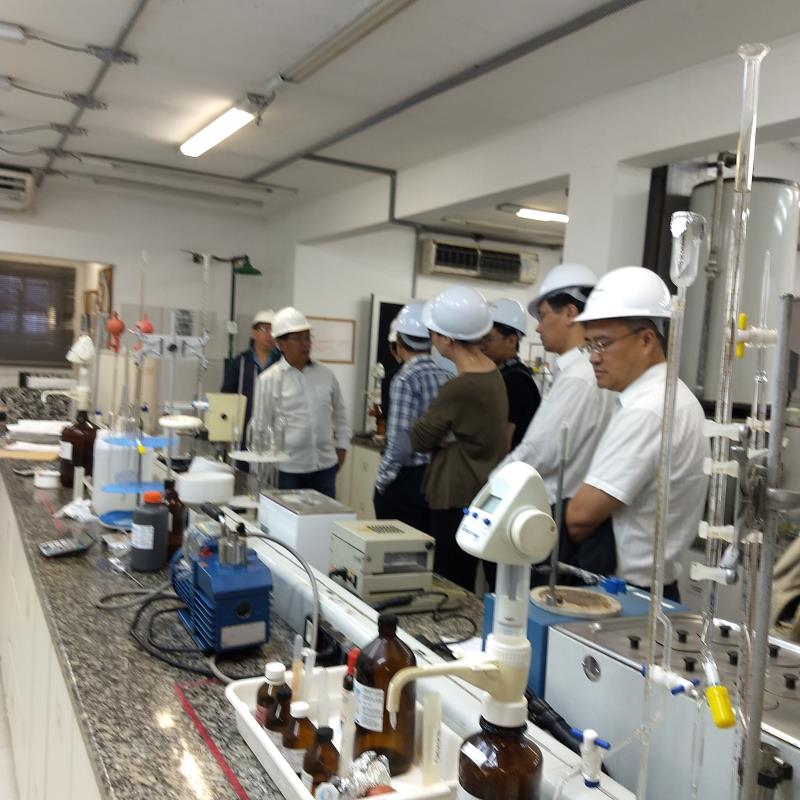
The cutting-edge technologies used by Tus-Clean Energy to convert poor quality soybean oil into biodiesel amazed local entrepreneurs and experts, he said.
The technologies developed by a research team at Tsinghua University could save energy production costs by roughly 30 percent, compared with conventional production methods, according to Wen.
The president said two of the local biodiesel producers were suitable targets for Tus-Clean Energy's expansion plans.
The smaller of the two could be acquired in the second half of this year and the other is forecast to be taken over next year, he said.
The move will enable Tus-Clean Energy to join the ranks of the earliest investors from China in the biodiesel industry in Brazil, he noted.
Wen declined to reveal the deal price but forecast that with the aid of technological and managerial teams dispatched to Brazil, the smaller facility could double its annual production capacity to 120,000 metric tons of biodiesel from the current 60,000 tons.
As the largest country in South America, Brazil is rich in natural resources, which is conducive to helping new energy businesses develop. The country has rolled out a policy that has increased the proportion of compulsory biodiesel it uses to 10 percent, spurring a boom in the local biodiesel market.
"We hope to promote our core technologies through investment projects worldwide," Wen said.
Currently, Tus-Clean Energy has more than 160 patents.

Positioning itself as a "global new energy ambassador", the company is focusing more on investing in technologies than in asset expansion, Wen said.
At the Global Bamboo and Rattan Congress held in Beijing in late June, the company showcased its latest technology that uses bamboo to replace iron and steel in the making of turbine blades for wind farms.
The patented technology has been piloted on wind farms in Shandong, Shanxi and Hebei provinces and is expected to help upgrade traditional industries in China's bamboo plantation centers including Jiangxi and Sichuan provinces, as well as aid in poverty relief, Wen said.
Utilizing its close bond with Tsinghua University in equity and research, Tus-Clean Energy has established a reputation for its technological prowess in the energy industry.
"Our fundamental and applied research programs are mostly conducted at Tsinghua University," said Wen, who himself was a graduate of the renowned school in Beijing.
"As a company affiliated with the university, we enjoy distinct advantages over our domestic peers in industrializing research results," he said.
In addition, the company has also imported state-of-the-art technologies from the United States, Finland and Israel.
To advance its tech commercialization projects, Tus-Clean Energy has set up industrial funds, each worth billions of yuan, focusing on the photovoltaic, heat, biodiesel and power grid sectors.


















