China writing its book in its own way










"Crossing the river by feeling the stones" as former leader Deng Xiaoping put it metaphorically, is how China started implementing reform and opening-up in 1978. Reform began in a gradual, experimental manner, by first allowing farmers to farm their own land on long lease and build township-and village-level companies. The establishment of special economic zones followed, which helped build an export-oriented economy and attracted foreign capital. And the foreign companies that flocked to China with money and expertise helped its economic growth.
At the same time, China's development has also helped the rest of the world. For instance, after the 2008 global economic crisis, China led the world out of the downturn, with its growth sparking global recovery and helping Europe and North America to get back on track.
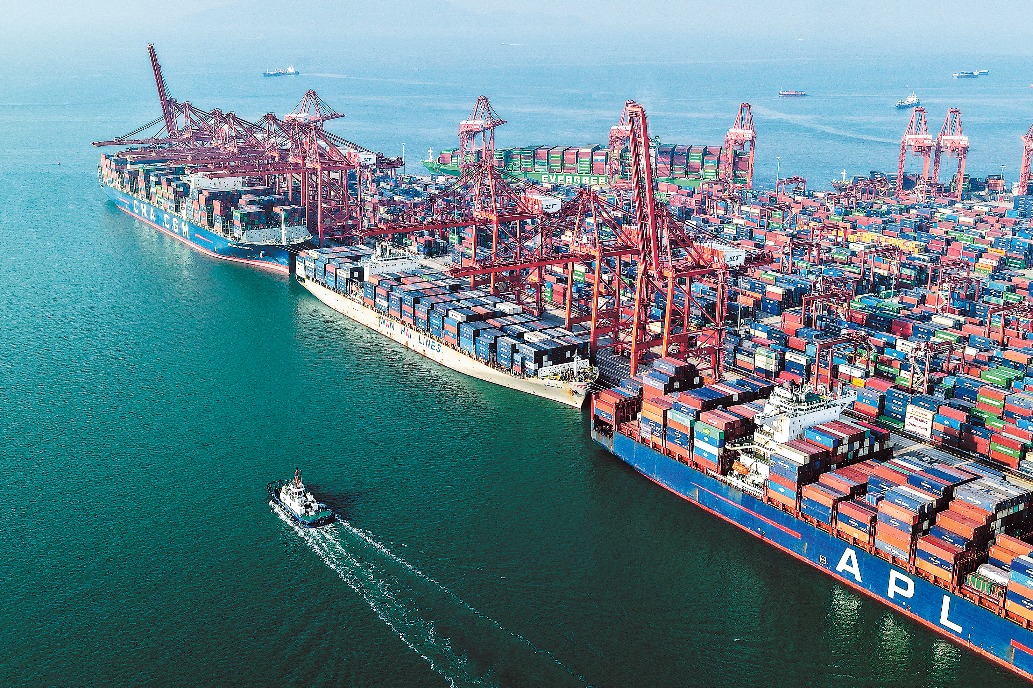
Thanks to reform and opening-up, China has transformed from a poor country into the world's largest manufacturing powerhouse and second-largest economy. It has lifted 800 million people out of poverty and is advancing toward its target of eradicating absolute poverty by 2020. Plus, its growing prosperity has created a huge market for the rest of the world.
To move its modernization to a new level, China has unveiled a new two-stage plan to be implemented between 2020 and 2050. In the first stage (2020-2035), China will build on the foundation of a moderately prosperous society to move toward its second goal of developing into a great, modern socialist country.
But the United States has been uncomfortable with China's rapid rise. The change in the manner in which the US has dealt with China over the past four decades is a case in point, and the latest change "coincides" with China's increasing determination and confidence.
US President Richard Nixon visited China in 1972, which led to the normalization of bilateral diplomatic ties in 1979. Since then, the US has engaged China one way or another. For example, the George W. Bush administration sought and received China's cooperation in the global war on terrorism.
But the US' engagement with China was based on the assumption that, due to deepening reform and opening-up, China would eventually become like a Western country. And since the China story has not unfolded the way Washington expected it to, the US has become suspicious about China's rise. Some US scholars and strategists think the US' engagement policy has created a competitor that is now challenging US hegemony.
China's polity and society remain Chinese, albeit the country's confidence level has greatly increased. China is now a member of almost all the important international organizations and an important shareholder in world affairs. It also has come up with its own initiatives to promote multilateralism.
Amid these changes, the Barack Obama administration's China policy shifted from cooperative engagement toward balancing and hedging based on its "pivot to Asia" policy designed to contain China's peaceful rise.
The Donald Trump administration's China policy, on the other hand, has changed it to hostile containment. Which is intensifying trade disputes with China. The US' Nuclear Posture Review, and the National Security Strategy and National Defense Strategy reports have identified China as a major strategic competitor and military threat. And a report released by the White House in June called China's development "economic aggression".
"China is writing its own book now. The book represents a fusion of Chinese thinking with lessons learned from the failure of globalization culture in other places. The rest of the world has begun to study this book," Joshua Cooper Ramo has written in his paper Beijing Consensus. Cooper is vice-chairman of Kissinger Associates, the consulting firm of former US secretary of state Henry Kissinger.
But not everyone in the rest of the world understands the book China is writing. And some want to prevent it from writing that book. China, however, is sure to keep writing its story in its own way.
The author is China Daily Tokyo bureau chief. caihong@chinadaily.com.cn