Japan still trying to erase its shame for wartime atrocities









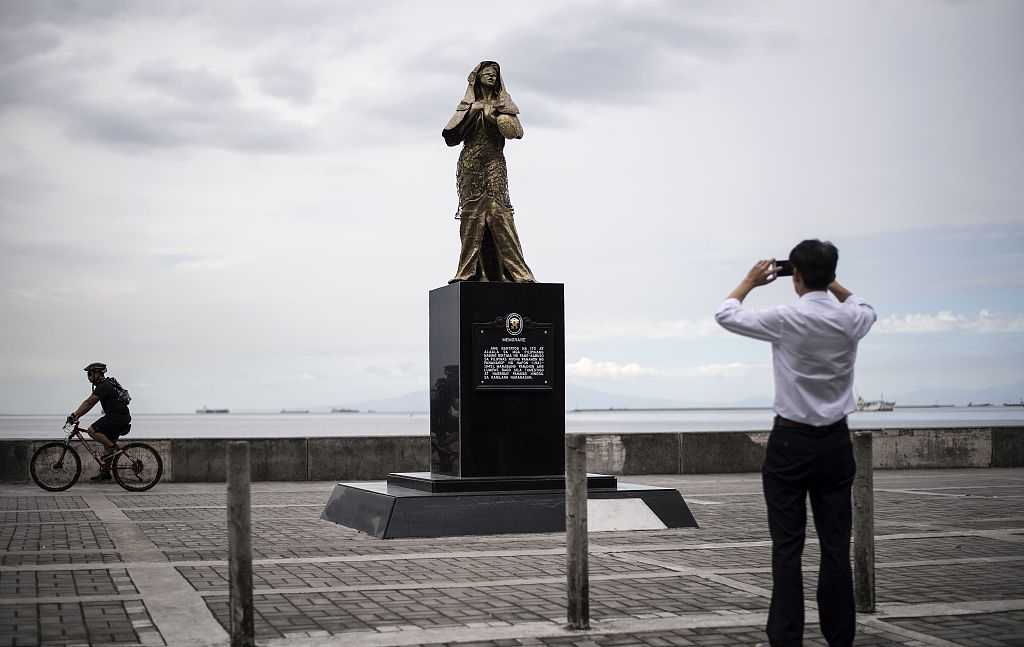
The removal of a public statue in Manila, which was erected last December and commemorates Filipino "comfort women" of World War II, has sparked fury and concern across the globe.
Can Japan really whitewash its country's WWII atrocities, especially its war crimes against sex slaves?
"This monument is a reminder of the Filipino women who were victims of abuses during the occupation by the Japanese forces from 1942-1945. It took a while before they came out into the open to tell their stories," read the inscription on the monument, which featured a blindfolded Filipino woman in a traditional Maria Clara gown.
According to media reports, the bronze statue was removed from its Roxas Boulevard site around 8 pm local time on Friday. Debris left behind was fenced in behind makeshift barriers.
Two weeks ago, a department of public works and highways backhoe was spotted parked beside the memorial, stirring speculation that the statue was to be demolished by the government under pressure from the Japanese government.
Despite opposition from local women's rights organizations, the government said the memorial was removed so that pipes could be laid underground.
"In a systematic and worldwide attempt to erase its war crimes, Japan successfully pressured the Philippines to remove the 'comfort women' memorial in Manila," said a statement issued on Saturday by the California-based Comfort Women Justice Coalition (CWJC), a grassroots, multi-ethnic and multi-national group which seeks compensation and justice for those WWII sex slaves and their families.
In 2017, the CWJC unveiled a memorial titled "Comfort Women: Column of Strength" in San Francisco.
"The memorial symbolizes our international resolve never to let that atrocity be repeated, and the memorial is also a reverent testament to all those who have been victims of sexual violence and sex trafficking," said the organization.
Japan has allegedly pressured the Philippine government to remove the memorial using its "financial support" to the country as leverage, according to CWJC.
Using money to erase its war crimes has become a pattern for the Japanese government, which has pressured UNESCO over its membership dues not to accept a "Comfort Women" dossier submitted by a team of eight countries, it continued.
The Japanese Embassy in Manila said the Philippine government had notified them before taking the statue away.
In January, Japan's internal affairs and communications minister Seiko Noda visited Philippine President Rodrigo Duterte to express displeasure over the memorial. The Philippine government afterward sent conflicting messages over whether or not it supported advocacy efforts on behalf of the comfort women.
Duterte said in January that he could not curtail the freedom of expression demonstrated by the "comfort women" advocacy groups. However, his Foreign Affairs Secretary Alan Cayetano said the Philippines can't strengthen its relationship with Japan if it keeps inflaming the "comfort women" issue, which he said was considered "settled."
GABRIELA, a local women's rights group, held a press conference on Saturday calling the statue removal "not acceptable."
"The City of Manila removed the Memorial without talking to the stakeholders," the group said in a statement. "Congress should investigate the process of how the Memorial was removed."
"I'm very sad, very devastated," said one Gabriela member. "I will demand the government of the Philippines sets up a larger memorial for the dignity of the victims."
It's estimated that between 1942 and 1945 as many as 200,000 young women from around Asia, including Korea, China, Indonesia and the Philippines, were forced to work in Japanese military brothels.
Many women who were enslaved by the Japanese military from 1932 until the end of WWII died without a chance to speak out about one of the world's largest-scale and most horrific human rights violations against women, said CWJC.
Contact the writer at junechang@chinadailyusa.com