



Confident PBOC no longer dances to Fed tune









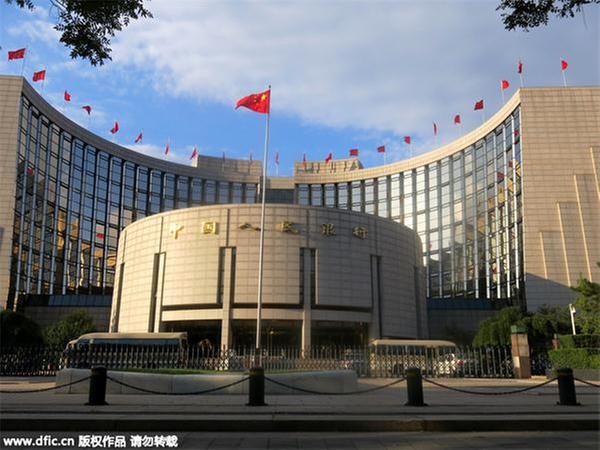 |
| View of the headquarters of the Peoples Bank of China (PBOC), Chinas central bank, in Beijing, June 27, 2015. [Photo/IC] |
The United States Federal Reserve's latest interest rate hike has imposed pressure on the yuan in terms of its exchange rate with the US dollar. This time, though, the People's Bank of China did not follow the Fed to raise China's domestic interest rates. Instead, it has continued its monetary expansion aimed at easing the tension in its credit market recently. After one and a half years of anxiety over capital flight, the central bank has regained its confidence to implement an independent monetary policy.
The fixed exchange rate regime helped China to maintain competitiveness from 1994 to 2012, a period when it relied on exports for fast growth. During that period, China's industrial sector experienced stunning growth in labor productivity. One worker around 2010 was equivalent to 12 workers in the early 1990s.
The growth was much bigger than that in the non-tradable sector, although the latter was remarkable-one service worker around 2010 was equivalent to four service workers in the 1980s. The Balassa-Samuelson effect, which depends on inter-country differences in the relative productivity of tradable and non-tradable sectors, then dictates that the yuan would experience real appreciation, that is, either its nominal value would increase against the currencies of China's major trading partners, or China's domestic prices would increase.
Either way, Chinese exports would become more expensive and lose competitiveness. The fixed exchange rate regime reduced the Balassa-Samuelson effect when China had huge slacks in its labor market: the fixed exchange rate regime shut down the channel of nominal appreciation, and labor surplus suppressed the growth of nominal wages so domestic prices did not increase fast enough to wipe out China's gains from productivity growth.
However, the economic fundamentals that supported the fixed exchange rate regime's role as a growth facilitator disappeared in 2012. For one thing, China no longer only relies on investment and exports for growth-some share of exports have been replaced by domestic consumption. For another, the growth of productivity has been reversed between the service sector and the manufacturing sector. And labor surplus has been replaced by labor shortage in the coastal regions; as a result, wages are growing at a much faster pace than before.
So China needs to adopt a more conventional exchange rate policy, that is, one that facilitates domestic macroeconomic stability. The fixed exchange rate regime forces the PBOC to follow the Fed's paces of counter-cyclical moves, which would cause conflicts in China's domestic markets, because its business cycles do not always follow those of the US. A flexible exchange rate serves as a buffer to shield off external shocks so the PBOC can implement independent monetary policy. For that, we should praise the PBOC for its calm response to the Fed's latest interest rate hike.
The next question is: Will the yuan continue its pace of devaluation that started in August 2015? Most economic regularities that economists have confidence in are about medium- or long-term movements of real variables. In the case of exchange rates, economists are more concerned about the real exchange rate than the nominal exchange rate.
The Penn effect (named after the famous Penn World Table that offers internationally comparable income data) is one of the regularities economists have found for the real exchange rate. It says that a country's aggregate price level relative to the reference country (usually the US) increases as the country narrows its per-capita-income gap with the reference country. Following this regularity, China would either have higher domestic prices or a higher value for the yuan relative to the US dollar if China's per capita income continues to catch up with the US level.
The PBOC has done a fairly good job to stabilize domestic prices. There is no reason why it will not be able to do that in the future. So the yuan would have to appreciate against the US dollar if China were able to narrow down its income gap with the US.
So the question is converted to whether China's economy would be able to grow at a reasonably high rate. Most economists would give a positive answer, because China shares many factors in common with the successful catching-up economies. It will probably take 20 years or more for China to reach the growth rate of the US. In between, catch-up will impose continuous upward pressures on the yuan. Currently, the Chinese economy is at the turning point of a new booming cycle. The PBOC is rightly putting more efforts into ensuring a robust recovery than to maintaining a stable exchange rate.
The author is the dean of the National School of Development and director of China Center for Economic Research, Peking University.





